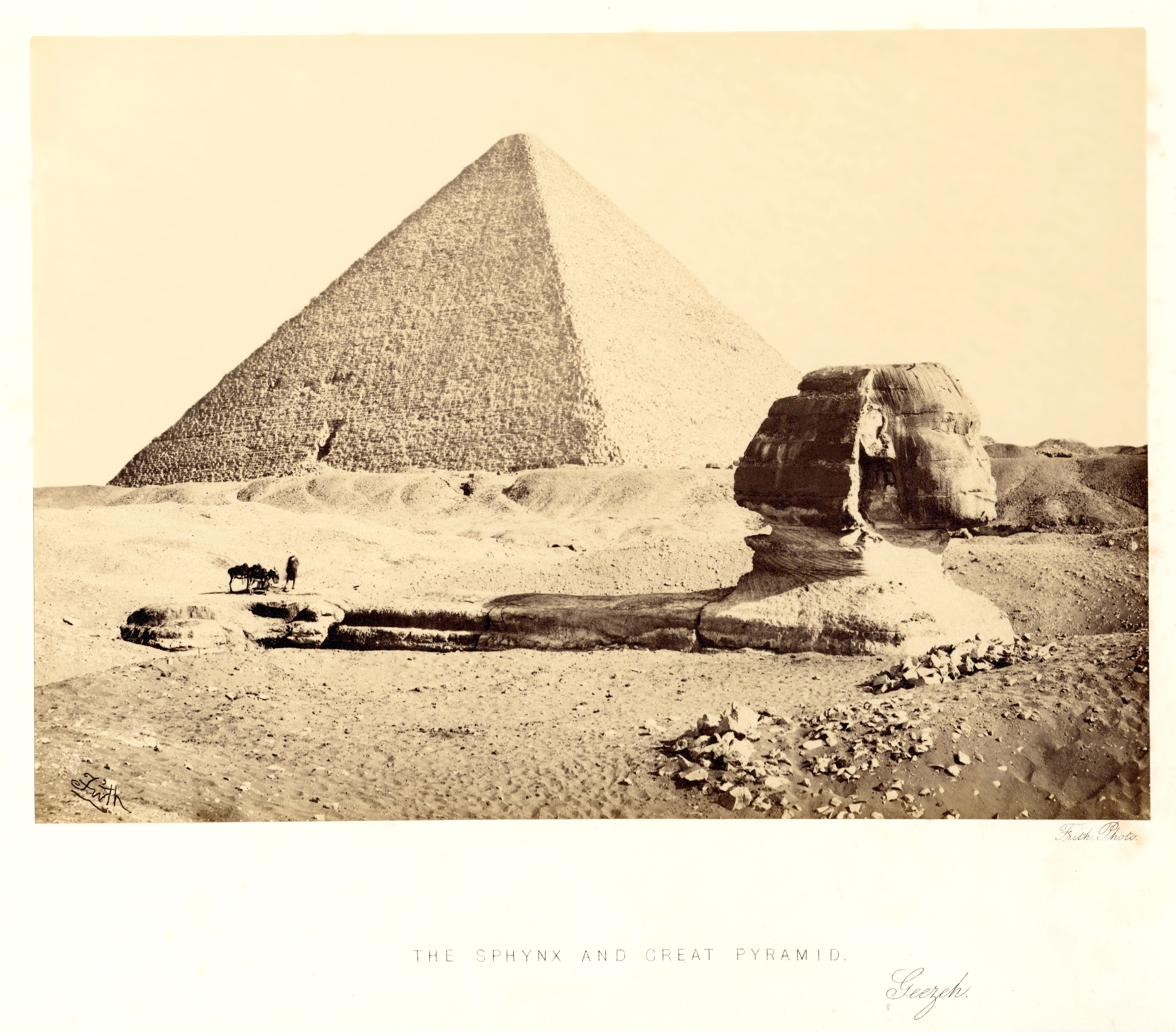
Francis FrithThe Sphynx and Great Pyramid, Geezeh, 1859Albumen print on its original mount, with printed caption. The Frith Archive
“The most extensive, important and well-preserved collection of early British documentary photography to have survived intact. It is a unique and priceless record of English life in the last century.”
Bill Jay, The Guardian
Francis Frith
The Victorian pioneer who photographed the Nile, then set out to photograph every town and village in Britain.
His firm kept at it for 110 years. What it left behind is the Frith Archive: some 310,000 photographs of more than 8,700 places, made between 1860 and 1970.
On the banks of the Nile, an Englishman of 34 knelt in a stifling tent and poured a syrupy liquid onto a sheet of glass. He had minutes to coat the plate, sensitise it, carry it to a camera the size of a packing case, expose it and develop it, all before the coating dried in the desert air.
“With the thermometer at 110° in my tent, the collodion actually boiled when poured upon the glass plate.”
Francis Frith
His name was Francis Frith. Not long before, he had been a grocer. Within a few years he would be among the most celebrated photographers of his age.
1822–1855
A grocer’s fortune
Frith was born in Chesterfield in 1822 into a Quaker family, and schooled at Ackworth and at Camp Hill in Birmingham. He was apprenticed to a Sheffield cutlery firm, broke down under the strain, and spent nearly two years wandering the towns and countryside of Scotland and Wales. Then he went to Liverpool, where he built a thriving wholesale grocery business victualling the ships that carried emigrants to America, and after it a printing business.
Commerce made him rich. Photography made him restless. In 1853 he helped found the Liverpool Photographic Society, and by January 1856 he was exhibiting his landscapes in London. That year he sold his businesses and, at 34, “retired” to devote himself to the new art.
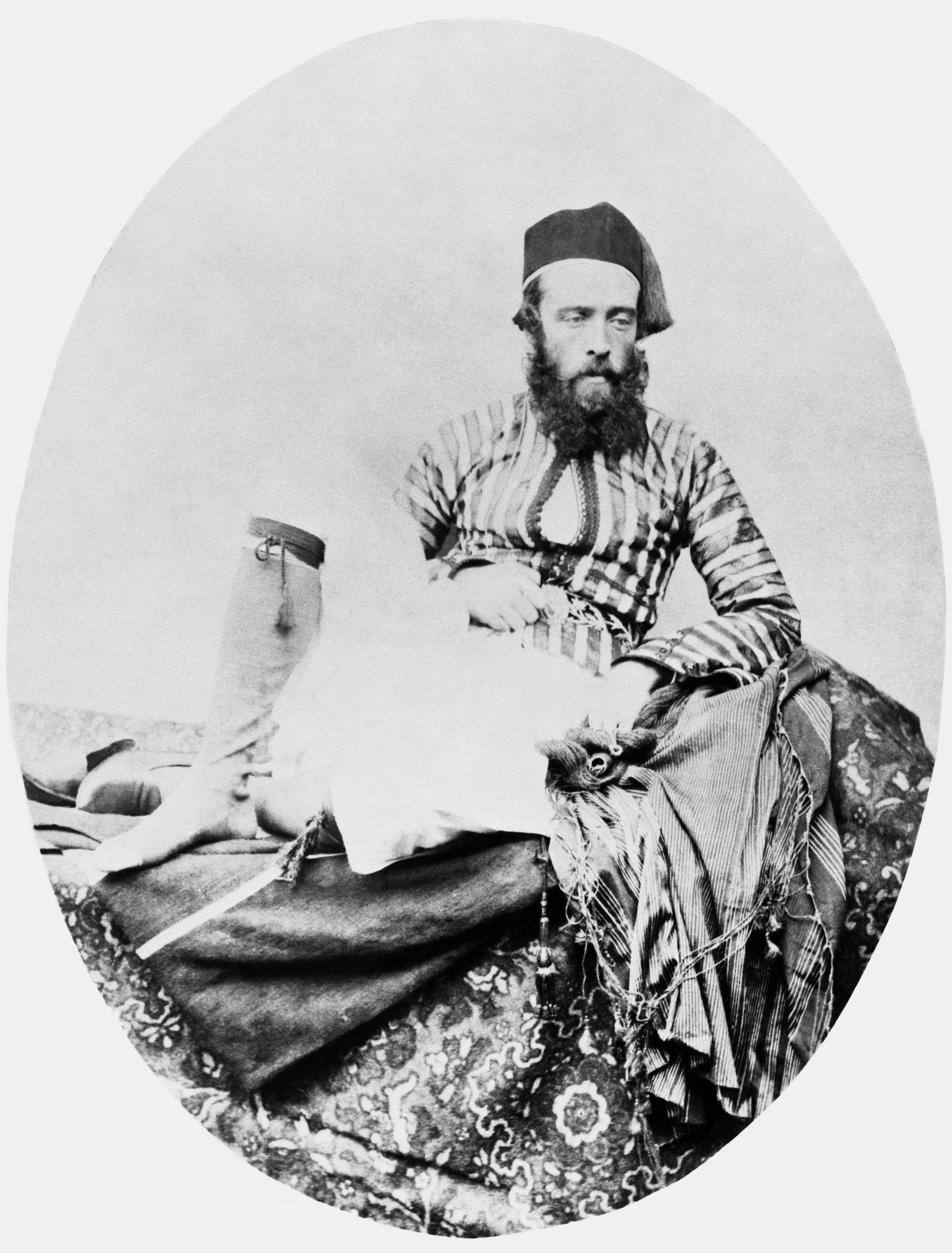
Francis FrithPortrait, Turkish Summer Costume, 1857Albumen print. The Frith Archive
1856–1860
Three journeys to the edge of the map
Between 1856 and 1860 Frith made three expeditions through Egypt, Nubia, Sinai, Palestine, Syria and Lebanon, by Nile boat, mule and camel. He carried three cameras. The largest took glass plates sixteen inches by twenty and travelled in its own wicker cart, which served as his darkroom and his bedroom. When the heat was too much, he developed his plates in tombs and caves.
On his third journey his party pressed nearly 1,000 miles south of the Nile Delta, farther than any photographer had gone before. He came home with views of the Pyramids, Karnak, Philae, Jerusalem and Damascus of a size and clarity no one in Britain had seen, and showed London a panorama of Cairo eight and a half feet long.
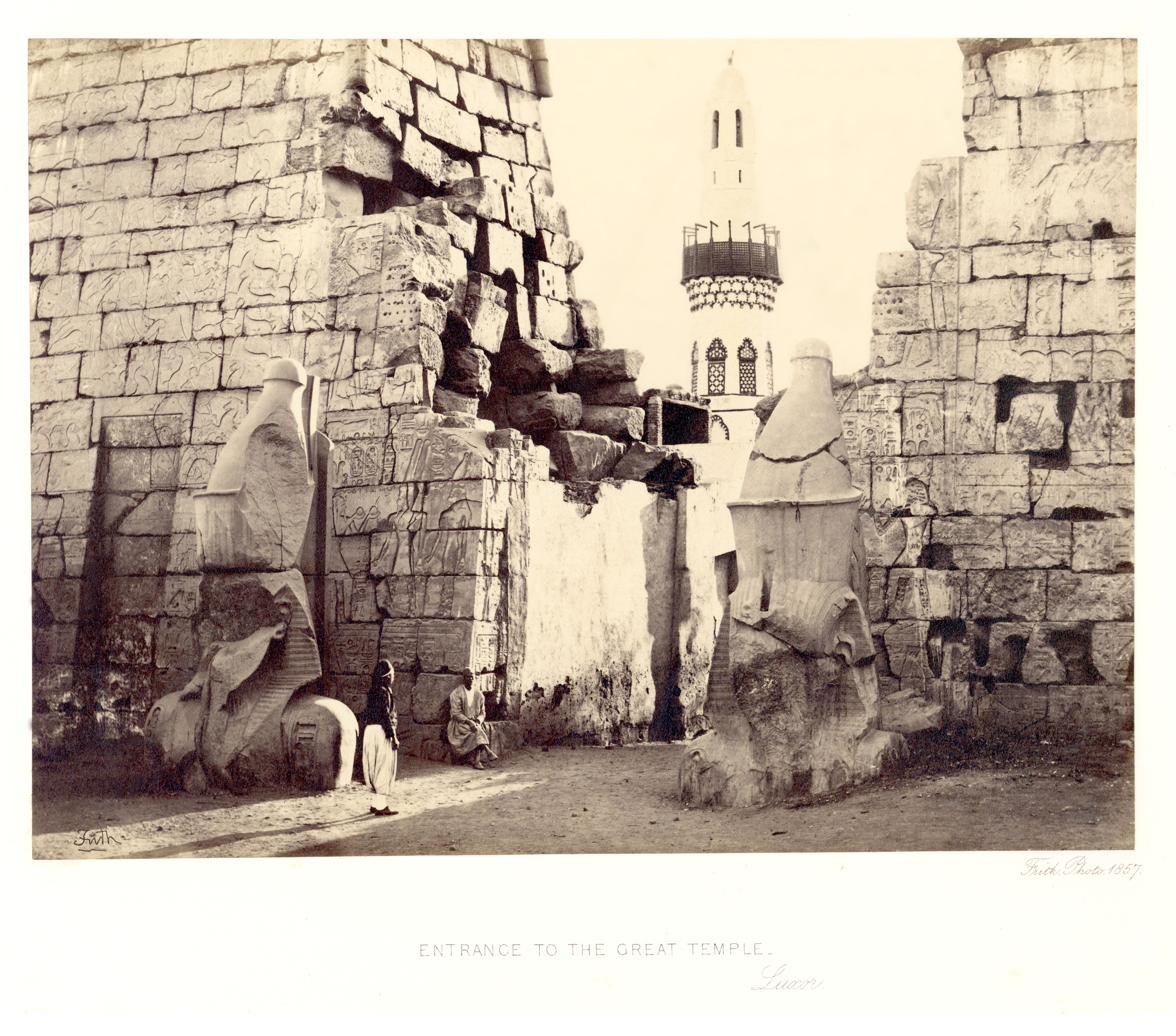
Francis FrithEntrance to the Great Temple, Luxor, 1857Albumen print on its original mount, with printed caption. The Frith Archive
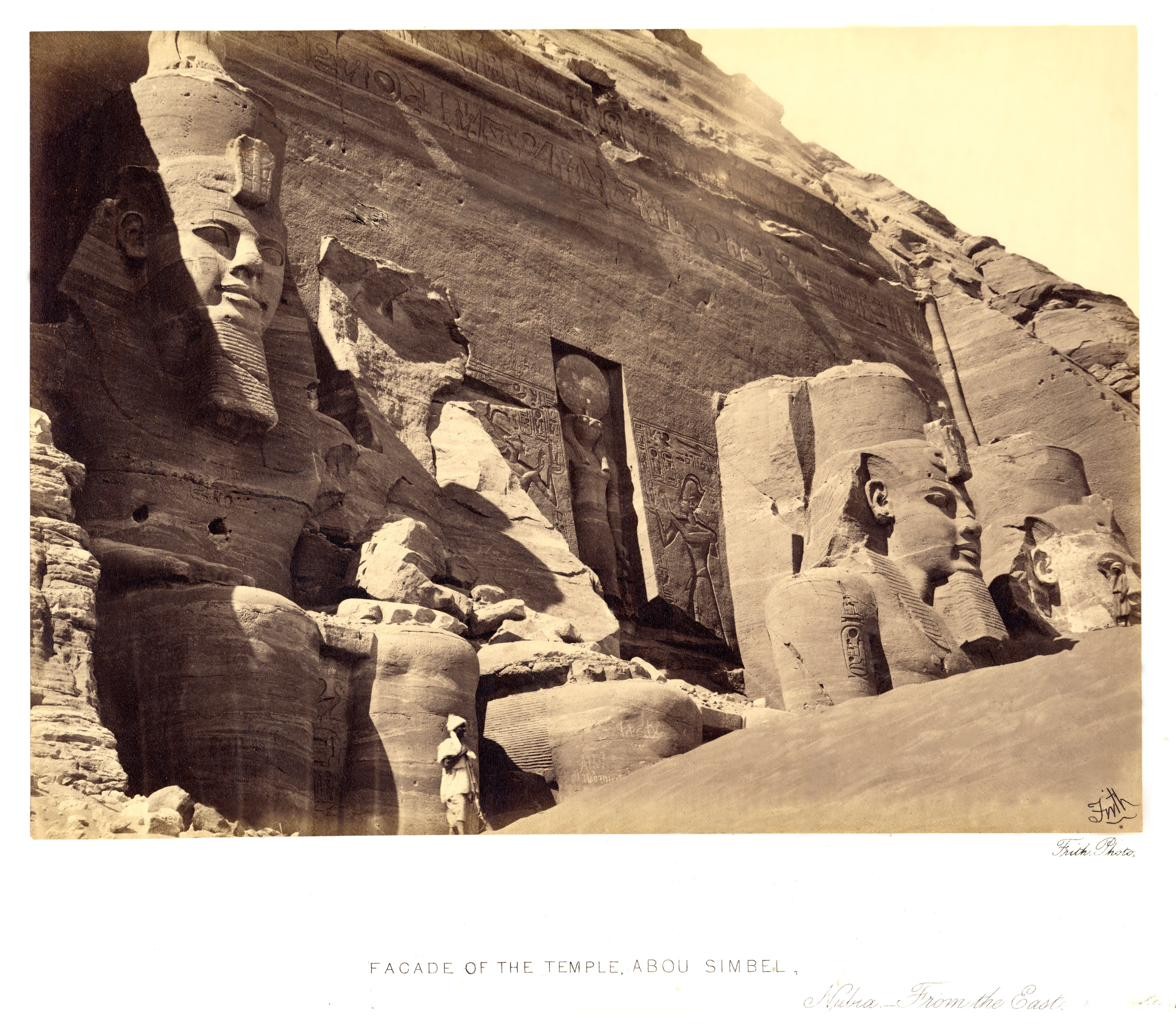
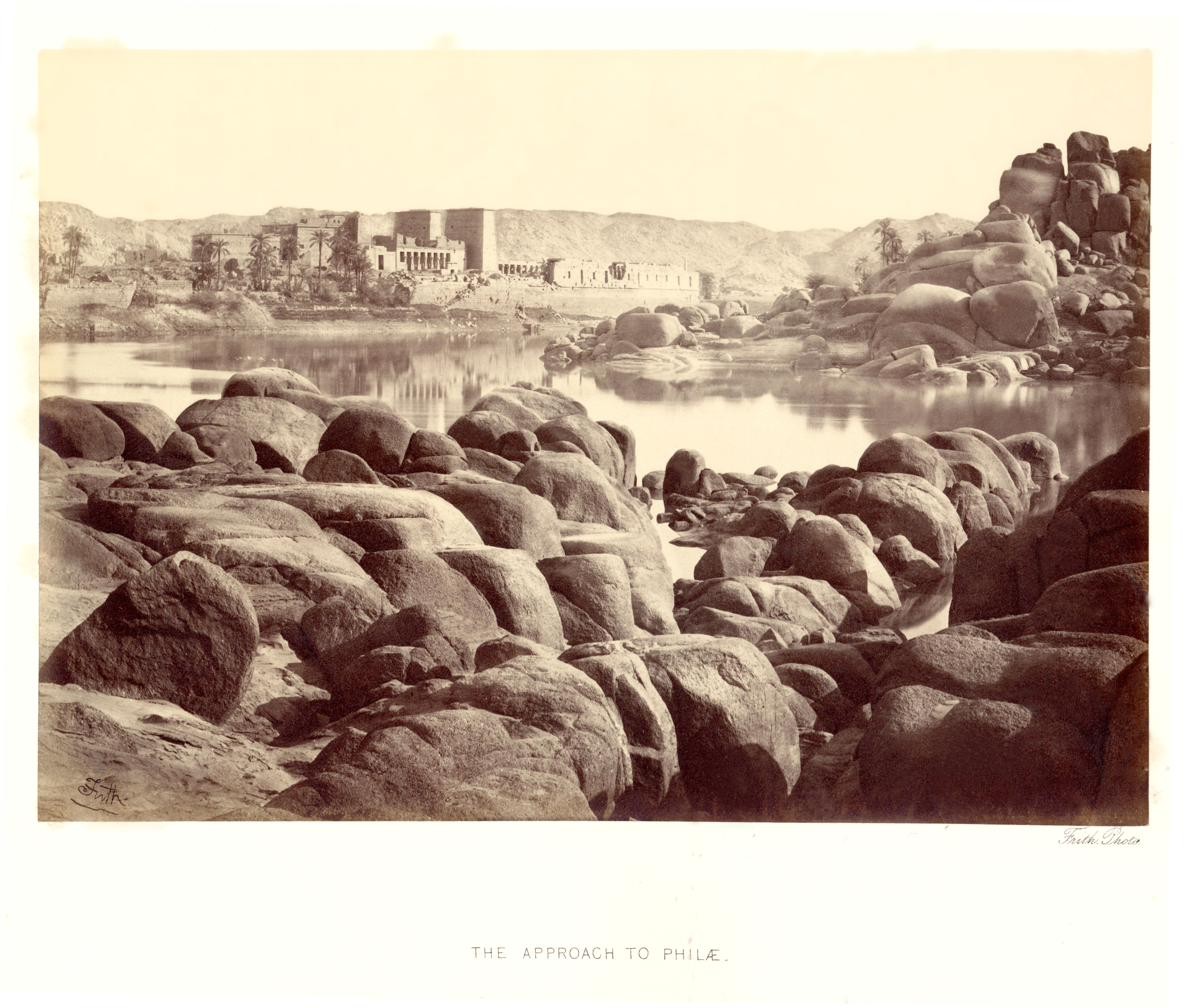
Francis FrithFaçade of the Great Temple, Abou Simbel, from the East, Nubia, 1860Albumen print on its original mount, with printed caption. The Frith ArchiveFrancis FrithThe Approach to Philæ, 1860Albumen print on its original mount, with printed caption. The Frith Archive
“A very beautiful, novel, and interesting series of stereoscopic views.”
The Times, 1 January 1858
“We conceive that nothing finer or more interesting has yet been done in Photography.”
Photographic Notes, 1858
“The largest book with the biggest, un-enlarged prints ever published.”
Helmut Gernsheim, historian of photography, on Frith’s Egypt, Sinai and Jerusalem
1860
An idea the size of a country
Frith saw early that one photograph could be sold again and again, in every form, to everyone. He issued the same views as large prints, as albums for subscribers and as stereocards for the parlour. The public could not get enough.
In 1860 his printing works moved to Reigate in Surrey, and by 1862 it was F. Frith & Co., often described as the world’s first specialist photographic publisher. It printed on an industrial scale: more than 152,000 photographs from his Egyptian and Holy Land negatives alone. Then he set himself a task on the scale of his journeys: to photograph every town and village in Britain.
The railways and the Bank Holiday Act of 1871 were turning Britain into a nation of day-trippers, and they wanted souvenirs. By the 1880s more than 2,000 shops were selling Frith photographs. Postcards followed, by the million.
“Frith and Co. soon became the largest photographic printing firm in the United Kingdom.”
Kathleen Stewart Howe, Encyclopedia of Nineteenth-Century Photography
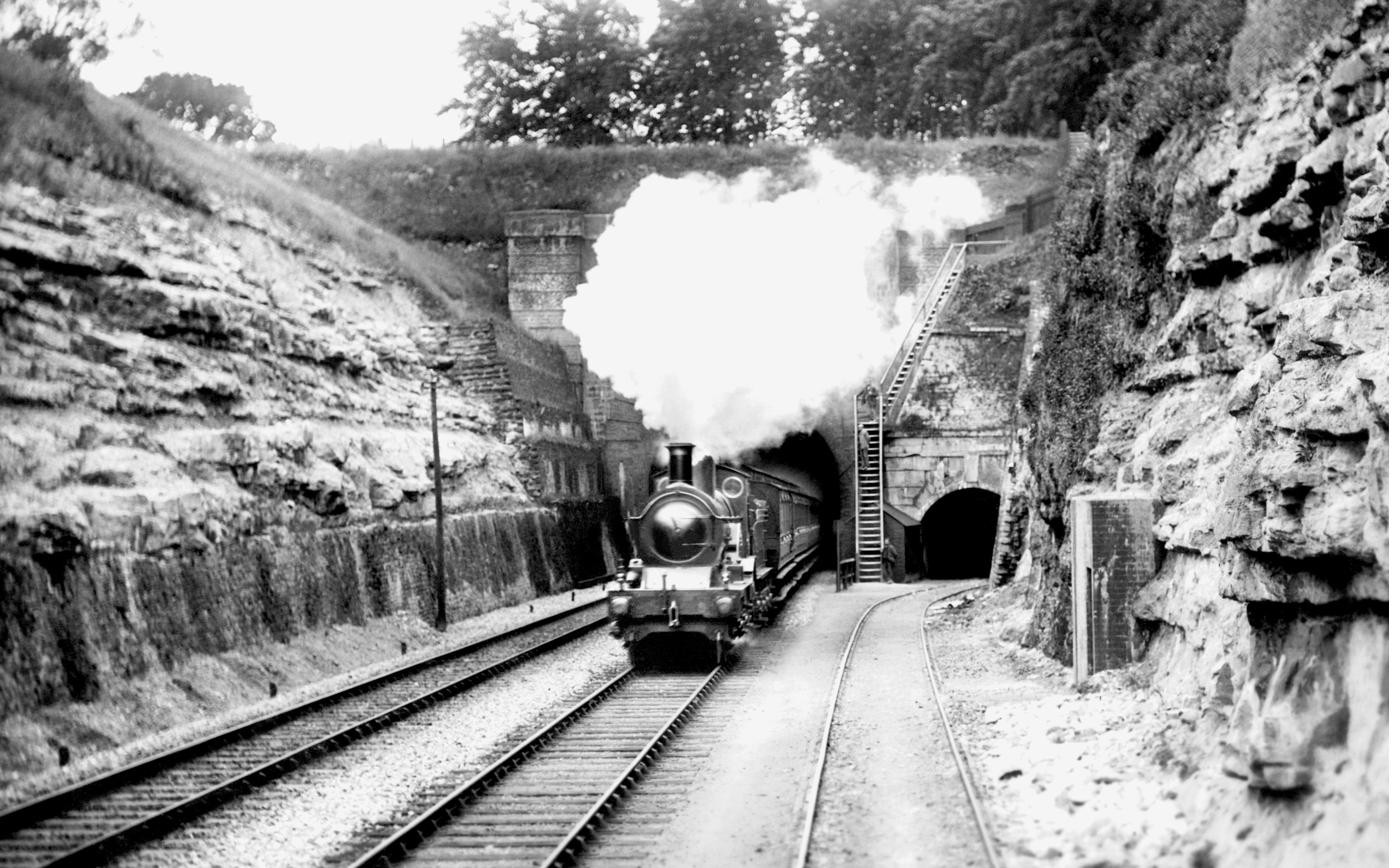
F. Frith & Co.Corsham, Box Tunnel, 1904Brunel’s Box Tunnel on the Great Western Railway. Negative no. 51492. The Frith Archive
1860–1970
A century of looking
Frith took the first British views himself. Soon a staff of travelling photographers was at work, held to the firm’s exacting standards. They returned to the same high streets, harbours and market squares decade after decade to keep the views up to date. Every negative was numbered, dated and entered in the firm’s ledgers.
No one planned what this produced: a dated, place-by-place record of a nation changing, from horse-drawn carts to motorways. The photographs show town halls and churches by Alfred Waterhouse and George Gilbert Scott when they were new, public libraries funded by Andrew Carnegie, cattle markets in town centres, bathing machines on the sands, and valleys in Wales and Derbyshire before they were flooded for reservoirs.
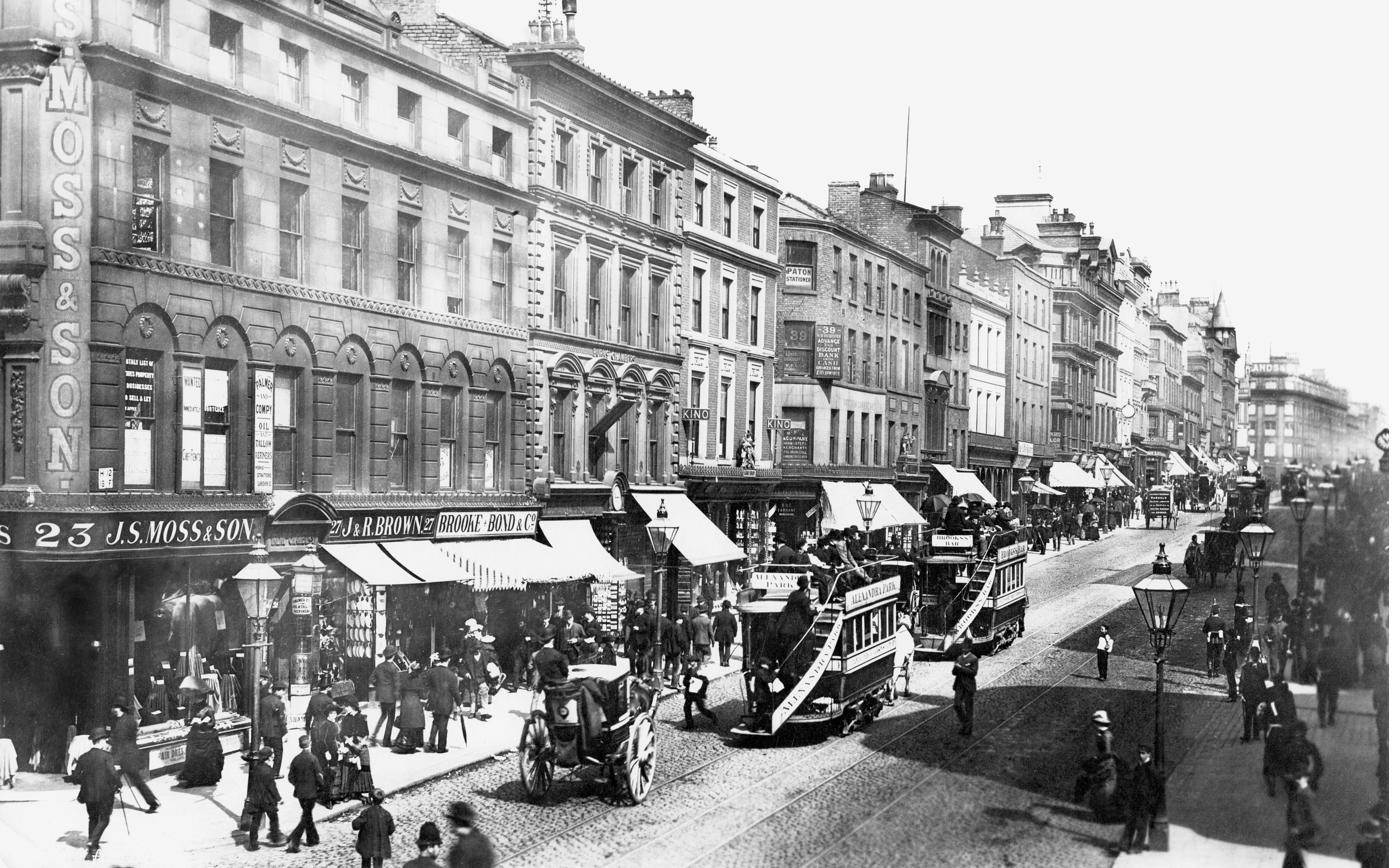
F. Frith & Co.Manchester, Market Street, c. 1885Negative no. 18266. The Frith Archive
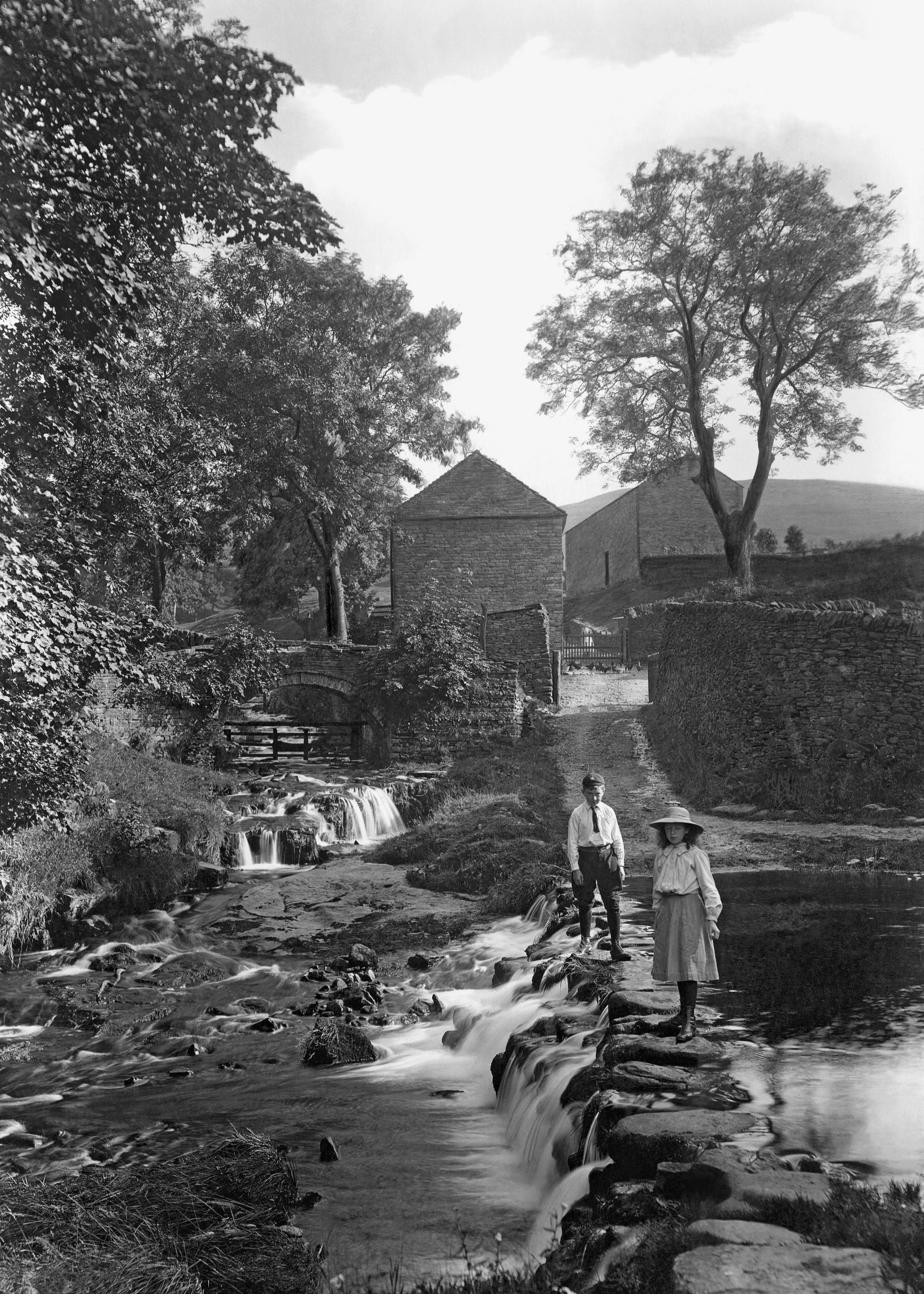
F. Frith & Co.Goyt Valley, The Stepping Stones, 1914Negative no. 67587. The Frith Archive. The valley was later flooded for reservoirs, and this scene now lies under water
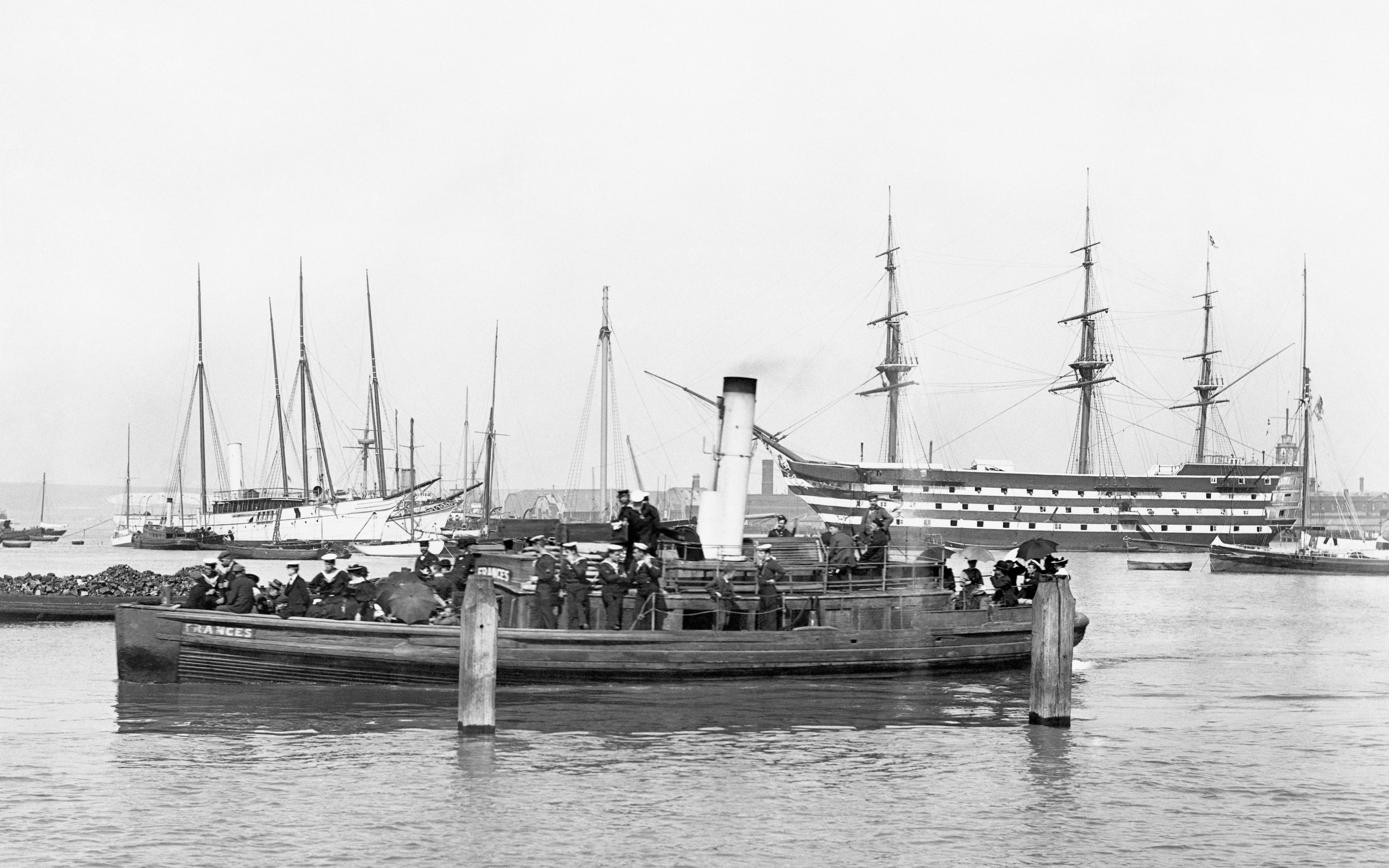
F. Frith & Co.Portsmouth Harbour and HMS Victory, 1898A boat crowded with naval ratings, with Nelson’s flagship beyond. Negative no. 42705. The Frith Archive
Frith died at Cannes in 1898. His sons Eustace and Cyril ran the firm until the family sold it in 1939, when the archive held some 70,000 images. Its later owners added about 200,000 more, and carried the work on until 1970.
1971
A week from the bulldozers
By 1971 the firm was in liquidation and its premises in Reigate were due for demolition. Hundreds of thousands of negatives, prints and ledgers faced destruction.
The photographic historian Bill Jay understood what was at stake. He wrote about the archive in The Guardian that October, and at the eleventh hour the tobacco company Rothmans of Pall Mall bought it and moved it to safety. A week later the bulldozers arrived.
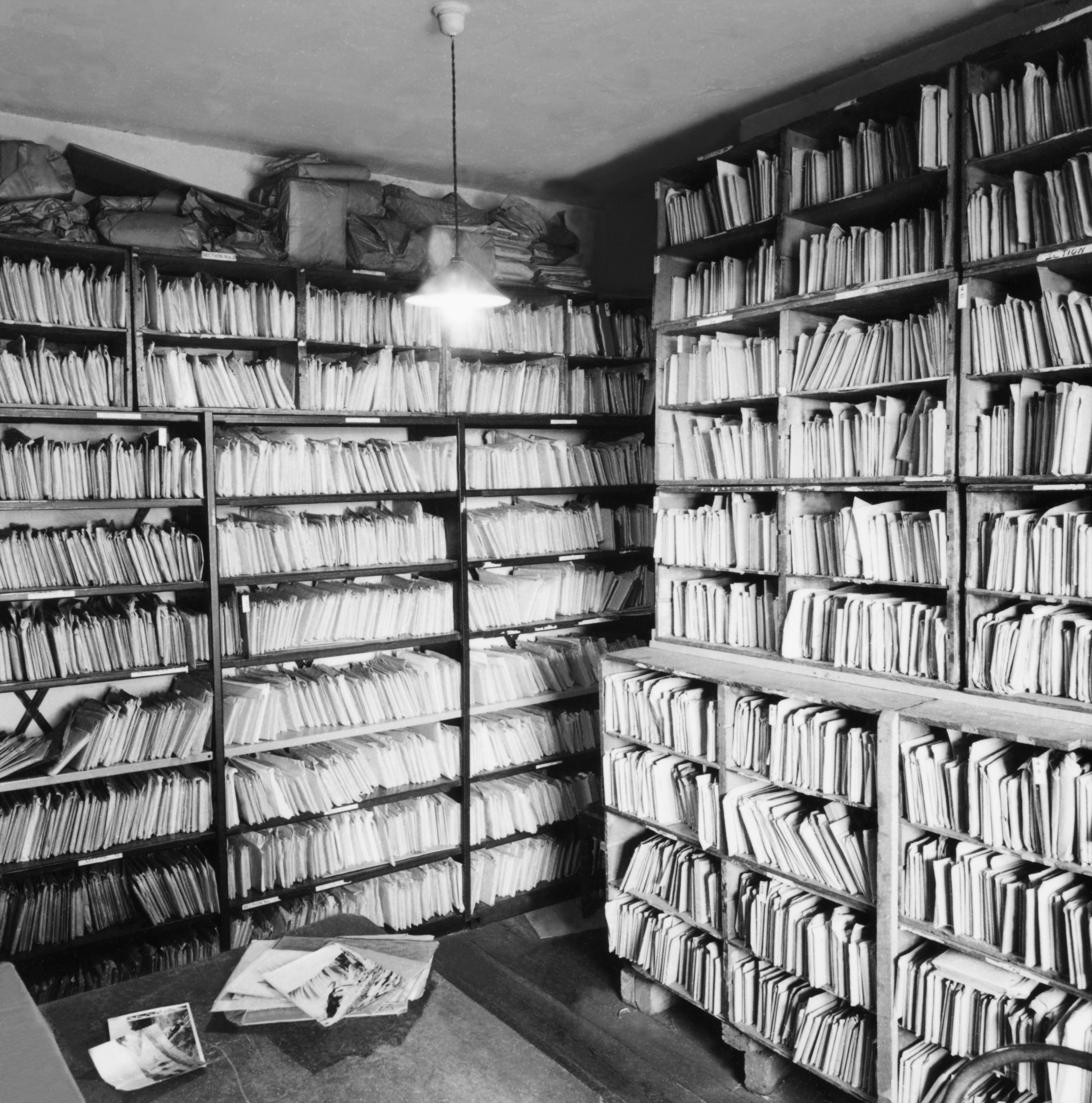
F. Frith & Co., ReigateMaster prints on their shelves, c. 1970Shortly before the rescue. The Frith Archive
Today
The archive today
John Buck first saw the archive in 1975, in a Manchester warehouse where it had been stored. Leafing through boxes of unidentified views, he was struck by a simple thought: every photograph showed a place that had played a part in someone’s life.
“Not every photograph is important to everyone. But every photograph is important to someone.”
John Buck, custodian of the archive since 1977
In 1977 he bought it from Rothmans, and it has been kept together as The Francis Frith Collection ever since. Between 1999 and 2016 every photograph was scanned and catalogued, the last 200,000 in a two-year campaign with a Phase One camera system.
Each image now has its own record, fixed to a date and an Ordnance Survey grid reference, so the archive can be mapped, searched and compared with the present day. Its website draws an average of 200,000 visitors a month, and the public has added more than 85,000 memories of the places in the photographs.
Alongside some 240,000 original prints and 185,000 original negatives, the archive keeps about 110 of Frith’s own prints from Egypt and the Holy Land, many still in their original paper wrappers. It also holds vintage prints by Francis Bedford, negatives by George Washington Wilson, one of the firm’s rare Cosmoscope viewers and its 700-page printed catalogue of 1882.
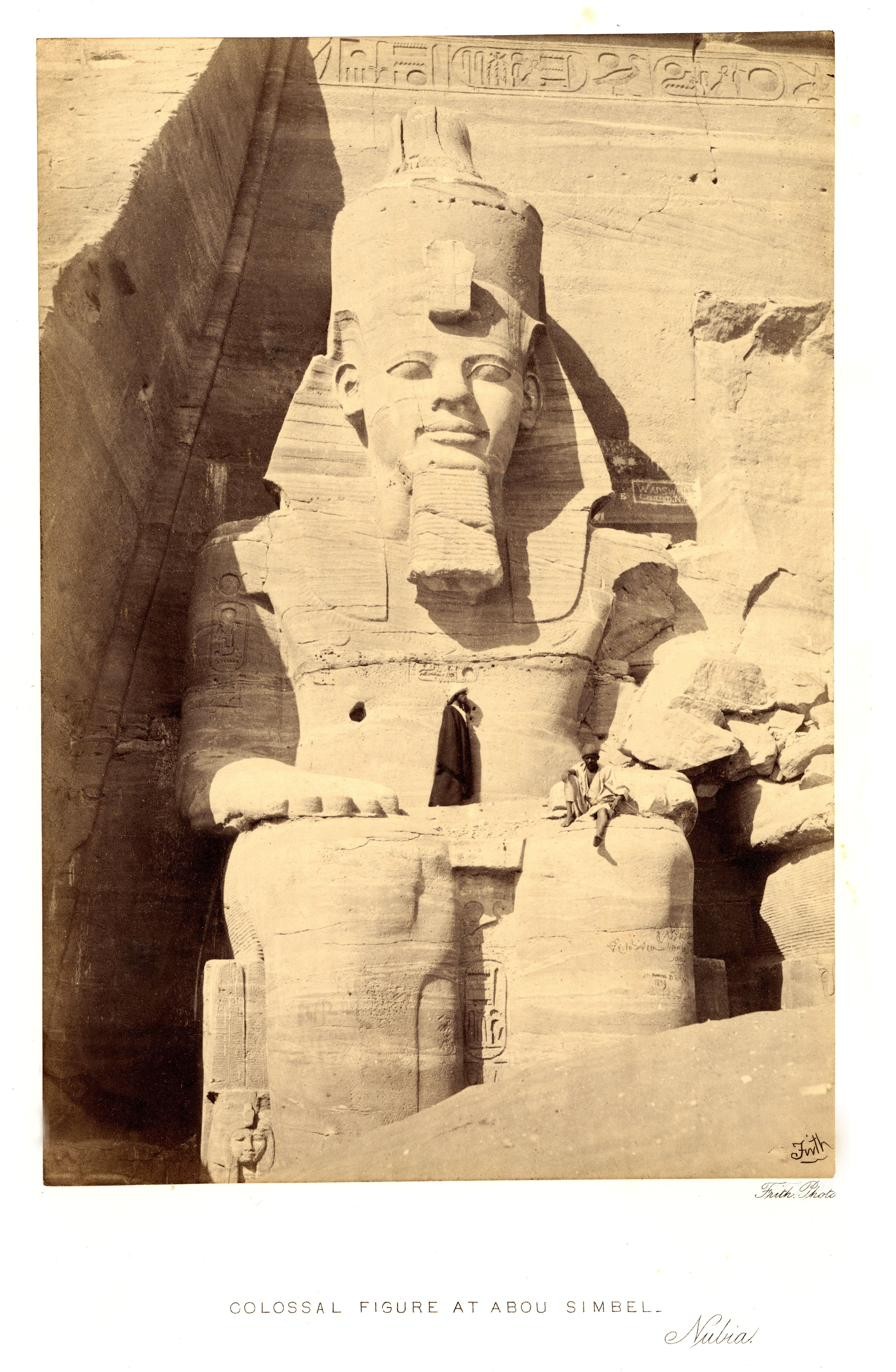
Francis FrithColossal Figure at Abou Simbel, Nubia, 1860Albumen print on its original mount, with printed caption. The Frith Archive
Original prints
c. 240,000
Original negatives, glass and film
c. 185,000
Photographs scanned and catalogued
c. 310,000
Cities, towns and villages recorded
more than 8,700
Years covered
1860 to 1970
Frith’s own prints of Egypt and the Holy Land
c. 110
Memories added by the public
85,000+
Local history books illustrated with Frith photographs
more than 1,000
Copies sold
2.5 million
Local historians who wrote them
more than 500
Words of local history written for them
more than 10 million
Significant intellectual property in all of this content, from the photographs and their catalogue to the text of the books and the public’s memories, is available to the acquirer.
An archive built to be used
For publishers, broadcasters and family-history platforms, the Frith Archive is ready from the first day.
Digitised and catalogued
Every one of some 310,000 images has been scanned at high resolution, with masters of up to about 8,000 pixels, and given its own record: date, place, county, Ordnance Survey grid reference and coordinates. The work is done.
Built around places
More than 8,700 cities, towns and villages, many photographed again and again over the decades. Anyone searching for a place, a street or a family’s roots can find it here.
A ready audience
francisfrith.com draws some 200,000 visitors a month without advertising, the books built on the archive have sold 2.5 million copies, and its images are already familiar to family historians on leading genealogy platforms.
More than pictures
More than 10 million words of local history and over 85,000 personal memories, each linked to the images and places they describe.
Complete ownership
The originals, the master scans, the catalogue, the text and the Frith name, in continuous use since 1860 and protected by registered trade marks, pass together to a single new owner, with the benefit of existing licences.
Why the Frith Archive matters
To the history of art
Frith’s mammoth-plate views of Egypt and the Holy Land are cornerstones of the great museum collections of nineteenth-century photography. The Metropolitan Museum of Art calls it “miraculous that he succeeded in making monumental and theatrical views”, and the Smithsonian counts him “one of the pre-eminent travel photographers of his day”. Collectors agree: in 2012 a complete copy of his Egypt, Sinai and Jerusalem, twenty mammoth-plate prints, sold at Bonhams in London for £337,250, nearly five times its high estimate.
To Britain
For thousands of towns and villages, the archive holds a dated sequence of views across a century: the same street, the same harbour, the same market square, changing. It records how ordinary people lived, worked, shopped and took their holidays, in places that still matter to the people who live there now. In 2012 BBC Two devoted a ten-part series to it, Britain’s First Photo Album.
To scholarship and culture
Historians of architecture, towns, transport and society draw on it, as do geographers, planners, conservation officers and family historians. Because every image is dated and mapped, the archive is as much a survey as a collection: a visual record of a nation, ready for research.
“It is difficult to exaggerate its importance. No other photographic archive provides so comprehensive, so wide-ranging and so technically accomplished a portrait of the physical evolution of the British Isles since the 1860s. To study it is to understand something of what has happened to this country in this momentous period.”
Philip Ziegler, historian and biographer
“His photographs are a direct confrontation with reality, shorn of gimmickry and sentimentality.”
Bill Jay, photographic historian, The Guardian
“Perhaps the critical British photographer of the 19th century.”
Paul Roth, Director, Ryerson Image Centre, Toronto, 2018
“In Frith’s lifetime without peer.”
Maxim Leonid Weintraub, on F. Frith & Co., Encyclopedia of Nineteenth-Century Photography
In the world’s great collections
Institutions have collected Frith since his own lifetime. The State Library of Victoria in Melbourne bought a Frith album in 1860; the National Gallery of Art in Washington added Frith prints in 2018, 2021, 2023 and 2025. His photographs are held today by:
United Kingdom
Victoria and Albert Museum
National Galleries of Scotland
Tate
National Portrait Gallery
Courtauld Institute of Art
Wellcome Collection
Cambridge University Library
United States
Metropolitan Museum of Art
J. Paul Getty Museum
National Gallery of Art, Washington
Museum of Modern Art
International Center of Photography
Museum of Fine Arts, Boston
Isabella Stewart Gardner Museum
Brooklyn Museum
Cleveland Museum of Art
Nelson-Atkins Museum of Art
George Eastman Museum
Smithsonian Institution
Library of Congress
New York Public Library
Princeton and Yale University Libraries
Europe, Canada, Australia and Qatar
Rijksmuseum, Amsterdam
Bibliothèque nationale de France
Canadian Centre for Architecture
State Library of Victoria
Museums Victoria
Qatar National Library
Selected exhibitions
National Gallery of Art, WashingtonThe Eye of the Sun: Nineteenth-Century Photographs
Victoria and Albert Museum, LondonV&A Photography Centre
J. Paul Getty Museum, Los AngelesIn Focus: Picturing the Landscape
Getty Villa, MalibuAntiquity & Photography: Early Views of Ancient Mediterranean Sites
Minneapolis Institute of ArtSite Lines: Photographing Historic Spaces
Nelson-Atkins Museum of Art, Kansas CityExploring Egypt: 19th Century Expeditionary Photography
Museu Nacional d’Art de Catalunya, BarcelonaNapper i Frith: A Photographic Journey through Nineteenth-Century Iberia
Douglas R. Nickel, Francis Frith in Egypt and Palestine: A Victorian Photographer Abroad. Princeton University Press, 2004
Bill Jay, Victorian Cameraman: Francis Frith’s Views of Rural England, 1850–1898. David & Charles, 1973
John Hannavy, ed., Encyclopedia of Nineteenth-Century Photography. Routledge, 2008
Philip Ziegler and John Cleare, Britain Then & Now: The Francis Frith Collection. Weidenfeld & Nicolson, 1999
Kathleen Stewart Howe, Excursions along the Nile: The Photographic Discovery of Ancient Egypt. Santa Barbara Museum of Art, 1994
2027
The next steward
For more than 150 years the Frith photographs have passed from hand to hand: from Francis Frith to his sons, to the firm’s later owners, to Rothmans, to John Buck. In 2027 the archive will find its next steward, who will hold it, care for it and decide how it is shared in the century ahead.
We welcome enquiries from organisations and individuals who share an interest in the archive’s future.